What an emotion to finish a Paris-Roubaix Challenge, as an absolute fan of cycling having the chance to participate in a monument is extraordinary. Watching the mythical races on television is good but participating in it is still something else. Realising the difficulty of riding on high-speed cobblestones.

The day before the men's race, it is therefore possible to leave for one of the 3 distances: 70km, 145km or 170km. The first 2 distances depart from Roubaix while the 170km departs from the city of Busigny, there is the possibility of taking a bus from Roubaix on the morning of the challenge. For my part, I have aligned myself with the 145km course, which represents 18 paved areas. Including the 3 mythical 5 star cobbled areas of the Hole of Arenberg, Mons-en-Péveèle and Carrefour de l'Arbre.
As far as the 145km route is concerned, the first 55km are on a asphalt road. Then for the remaining 90 are the 32.5km of paved areas. Here's the set, the goal is to achieve this mini Paris-Roubaix at a good pace.
An Inflite Canyon for Parix-Roubaix Challenge
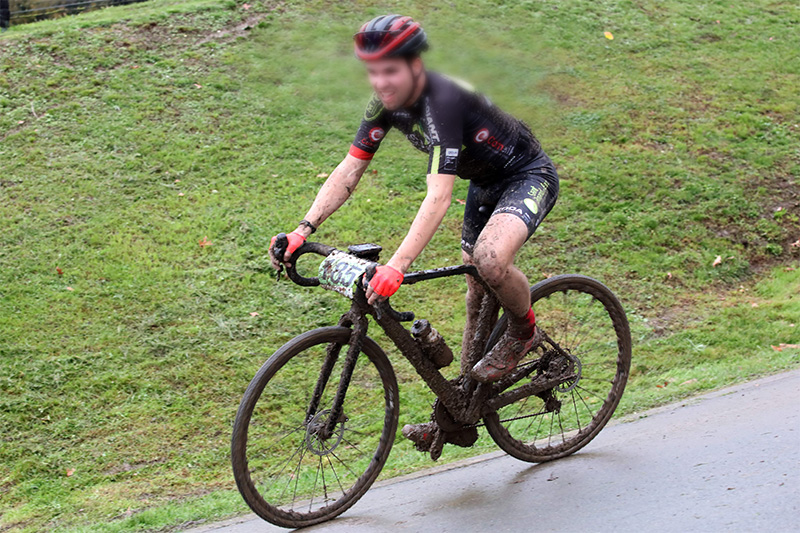
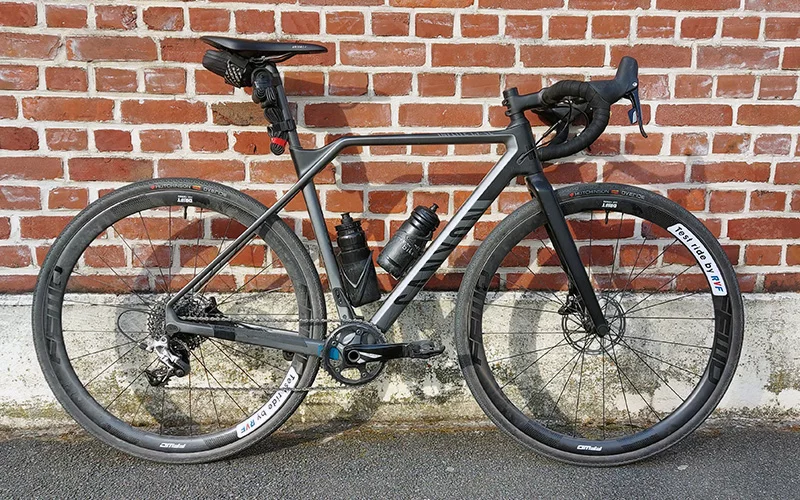
This is Canyon's cyclocross bike, the Inflite CF SL 7.0 Race. It is a carbon frame equipped with a SRAM Rival single tray group in 40x36. The frame is made for cyclo-cross, so for tyres of 33mm but accepts tyres of up to 40mm. The weight of my bike equipped for this Paris-Roubaix Challenge is 8.6kg.
Fast Forward Wheel Focus
The Inflite Canyon is equipped with a pair of wheels of Gravel, the Fast Forward FFWD Drift. They have an internal width of 24mm without hooks mounted from Hutchinson Overide tubeless tyre in 35mm. The wheels are made of carbon for a weight of 1.5kg with a DT240 hub. The pair of tyres is perfect for the Paris-Roubaix Challenge and its many cobblestones with its central tread and tiny crampons on the flanks. To talk about tyre pressure, for my 69kg weight. I left with 3 bars for the road section and once on the cobblestones, I reduced to 2.5 bars. I didn't want to lower any more so as not to type rim bottom and damage the carbon wheels. This did not prevent you from having a good balance between comfort and performance.
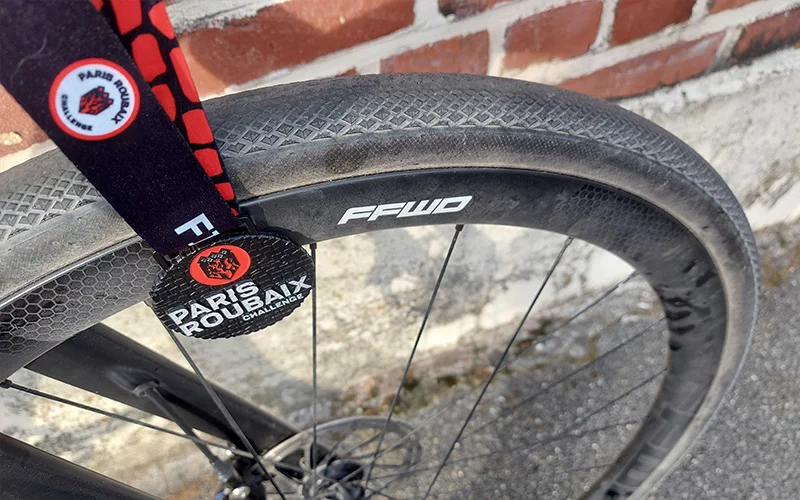
The "Roues" part is very important to manage upstream and during the Paris-Roubaix Challenge to have a good time. It is to ban tyres mounted inner tube, too much risk of puncture and non-existent comfort. The pair of wheels mounted in hoses is totally possible but rarer in the amateur peloton. One thing is sure, leave with at least 2 spare air chambers in any case.
Equipment
My bike was equipped with a pair of pedals Look KEO Blade Carbon, their effectiveness is no longer to be demonstrated. On the other hand, their high quality on the road is probably the biggest defect on the pavements, the rigidity of the carbon blade. After more than 2 hours on the cobblestones, I felt ants at the foot level at the exit of each cobblestone area.
Then for the rest of the equipment, nothing specific except a mellow guidoline. Don't go with a thin hanger tape or add a second over it. Plan 2 cans as well as food for 5 to 6 hours. In emergency equipment, 2 inner tubes, a mini pump, a C02 cartridge and a multi-tool.
Back to experience
This is the second time I've aligned myself with the Paris-Roubaix Challenge, once again on the 145km. But this time, I am much better prepared at the material level than the first time. Novice on my first edition, I left with 28mm inner tube tyres... the mistake of my life. This year, I was able to contemplate the novices on the first paved area of the Troué d'Arenberg repairing their puncture.
The only disadvantage with my 35mm tyres is that you feel like you're "sticked" on the road. But once on the paved areas, I can bomb as never before and be serene. Taking groups on the start of the journey and on the few long transitional portions, I'm not doing so badly. The unfavourable wind was present on a few pieces of the course. I'm closing the 145km in 5h58, which is an average of 27.7km/h, which I'm completely satisfied with.
As usual the organization by ASO is square, the removal of the bibs at the velodrome is done quickly. In the envelope, there is a plate equipped with an RFID chip to track passage times. Also a bib and sticker with different cobblestone and refuelling areas, a detail but very practical once on the course. The start is made in small groups in front of the Roubaix Velodrome, this year more than 4000 cyclists took part in the event.
The most
- The decorative arches at the level of each cobbled area, we think we are a professional
- Refuelling is correct with mechanical assistance
The least
- On open road, the crossing at the commercial area of Orchies is complicated as well as the return to Roubaix
It is really an event in which one must participate at least once in one's life, to be aware of the difficulty of this journey. Paris-Roubaix is really a warrior race, it is only possible to blow an inlet velodrome.
- Tariffs 2022: As usual ASO implements a progressive rate based on the number of racers sold.
- 70km : 25€, 35€ and 45€
- 145km : 35€, 45€ and 55€
- 170km : 59€