In the world of cycling, some names resonate with a particular prestige. Pinarello is one of those. An emblematic Italian brand, it has forged a reputation for refinement, innovation and success in competition. From its modest beginnings to its fruitful partnerships with the largest teams, Pinarello's history is intimately linked to the technological evolution of the bike and the greatest achievements of the peloton.
The origins of Pinarello: the story of an Italian passion
The Pinarello adventure began in 1952, in Treviso, in northern Italy, under the leadership of Giovanni Pinarello. Before being an entrepreneur, Giovanni was first and foremost a professional cyclist in the 1940s. If his career on the bike remains modest — he still won the Maglia Nera of the Giro d'Italia in 1951 (assigned to the last of the general rankings, but became a symbolic and media distinction) — it is in the workshop that he will write the rest of his history.
In 1953, he founded his own brand, Officine Pinarello, with the aim of designing tailor-made frames for professional and amateur riders. Quickly, the artisanal quality of Pinarello bikes seduces. From the 1960s and 1970s, the brand was noticed on the roads of the Italian classics and the Giro.
Technological evolution: from steel frame to cutting-edge innovations
Like any historical brand, Pinarello has accompanied — and sometimes has preceded — the great technological revolutions of cycling.
- Steel years : In the first decades, the Pinarello frames are made of Columbus steel, as was the norm at the time. The brand is already distinguished by the fineness of its welds and the nervous geometry of its frames, designed for competition.
- The arrival of aluminium In the 1990s, cycling gradually shifted to lighter settings. Pinarello adopts aluminum, with models that make the connection between rigidity, content weight and comfort.
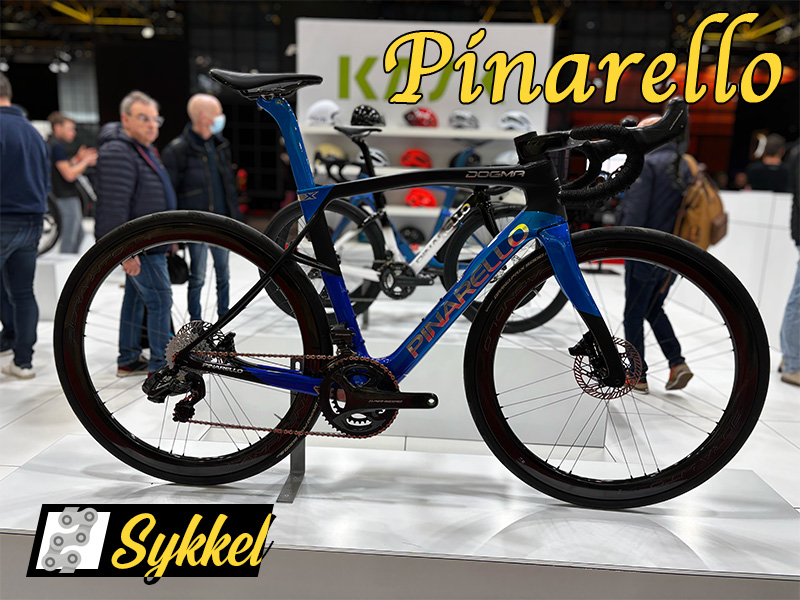
- The Carbon Revolution : At the turn of the 2000s, Pinarello invested heavily in carbon, a material that will transform the design of road bikes. It is at this time that the famous Dogma, a model that will become a global reference, appears. With winding lines, assumed asymmetry of the frame and extreme attention to aerodynamics, the Dogma marks a turning point and becomes the machine of the champions.
- Aerodynamics and integration : The last generations of Pinarello Dogma (F8, F10, F12 and today Dogma F) push the limits of aerodynamics and integration. Perfectly integrated disc brakes, hidden cable, optimization of the wind tunnel frame and work on the smallest detail make Pinarello a vanguard bike.
Pinarello and Team Sky/Ineos: an alliance at the top
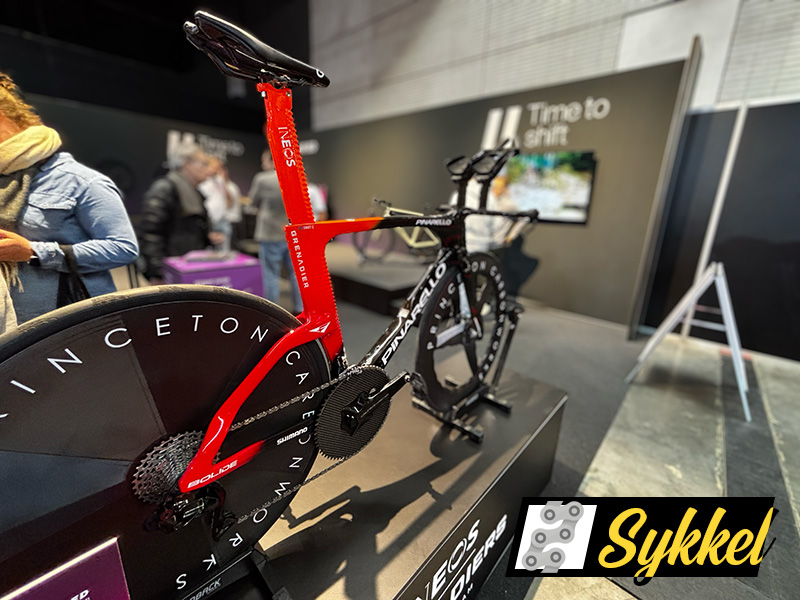
Pinarello's modern history is inseparable from its partnership with Team Sky, which became Ineos Grenadiers in 2019.
This partnership began in 2010, when the British Sky team was created, with the stated goal of winning the Tour de France within five years. Pinarello becomes the official supplier of the team's bikes, a strategic and symbolic choice, so the Italian brand symbolizes performance in competition.
Results soon to follow :
- In 2012, Bradley Wiggins won the Tour de France on a Pinarello Dogma 65.1 Think 2, offering the Italian brand a major success in the queen race.
- Chris Froome, with four victories in the Tour de France (2013, 2015, 2016, 2017) as well as a Giro and a Vuelta, further dedicates this partnership.
- Geraint Thomas in 2018 and Egan Bernal in 2019 perpetuate the tradition, all on the latest generation Pinarello Dogma.
In total, this partnership generated several final wins over the Tour, Giro and Vuelta, strengthening Pinarello's reputation as a champion brand. This technical collaboration is based on constant exchanges between the Pinarello engineers and the Ineos performance teams, allowing the development of custom prototypes for the major mountain stages, the time trial or the plain stages.
Dogma: A Living Myth
Among all the models of the brand, the Dogma is probably the best symbol of Pinarello's philosophy. A true technological showcase, it has always been developed in collaboration with the best teams and tested under the most demanding conditions of the World Tour peloton.
Its asymmetrical geometry, designed to compensate for the torsional forces exerted on the frame, its aerodynamic work and attention to each gram of matter make Dogma an exceptional machine. The different variations — from Dogma 60.1 to the recent Dogma F — have all marked their era.
Pinarello today: between heritage and innovation
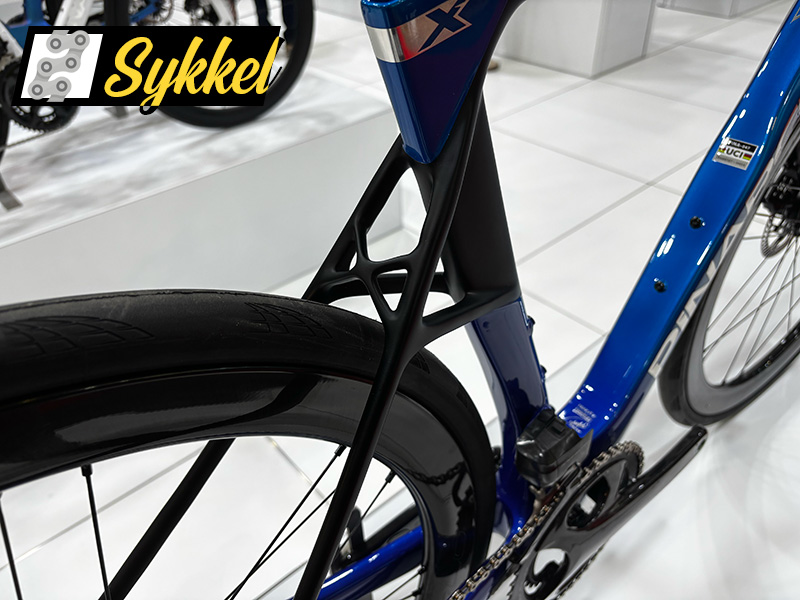
While the brand remains attached to its Italian heritage and to the artisanal cycling culture, it is now positioned as a major player in road cycling and engraver innovation. Pinarello also develops models for the general public, without denying its performance DNA.
At the same time, the brand remains present on the world's major competitions via the Ineos Grenadiers team, perpetuating a fruitful collaboration that shapes the peloton's standards.
Pinarello's story is that of a brand that has been able to pass through times, adapting to technological changes without ever losing its identity. From the first steel frames made in Treviso to the Dogma used by the leaders of the World Tour peloton, Pinarello embodies what cycling has most noble: an alliance of passion, tradition and innovation.
His partnership with Team Sky then Ineos Grenadiers will remain one of the most successful in modern cycling history, sealing a relationship where performance and technology feed each other.