The beginning of the cycling year rhymes with "Flandrienne classics", lovers of paved roads and borders are at the angels. At the beginning of the season, the professional platoon is divided into 2. One part by on the sun races (Spain, South of France, Portugal, ...) and the other part to the north for the classic Flandriennes.
What a difference between Semiclassical vs. Semiclassical Classics
What separates the Classics or Semi-Classics is simply the "prestige" of this race, we will find the teams UCI World Tour with their greatest runners on these classics. These races are historic, they were created several decades ago such as Paris-Roubaix created in 1896. The other main Classic Flandrienne is of course the Tour of Flanders (Ronde Van Vlaanderen) created in 1913.

These races take place in northern Europe, mainly in Belgium but also in France and the Netherlands. Traditionally the classical period begins in Belgium with 2 semi-classical het Nieuwsblad circuit and Kuurne-Brussels-Kuurne for the opening weekend.
Classics
- Paris-Roubaix
- Tour of Flanders
- E3
- Ghent-Wevelgem
Semi-Classicals
- Classic Bruges-La Panne
- Across Flanders
- Grand Prix de l'Escaut
- Nokere Koerse
What are the peculiarities of Flandrienne classics?
The main difficulties of these classics are the mountains called "Bergs", obviously the pavements that can be present during the climbs of the Belgian mountains and the wind that is at the rendezvous during this period of the year.
The main banks
- Kemmelberg
- Kluisberg
- Baneberg
- Grammont Wall
- Old Quaremont
- Koppenberg
- Paterberg
The main cobbled sectors
- The Aremberg hole - 2,300 m
- Wallers in Hélesmes - 1,600 m (Pont Gibus)
- Beuvry-la-Forêt à Orchies - 1,400 m (Pavé Marc Madiot)
- The crossroads of the Tree - 2,100 m
- Mons-en-Péveèle - 3,000 m
- Camphin-en-Péveèle 1 800 m
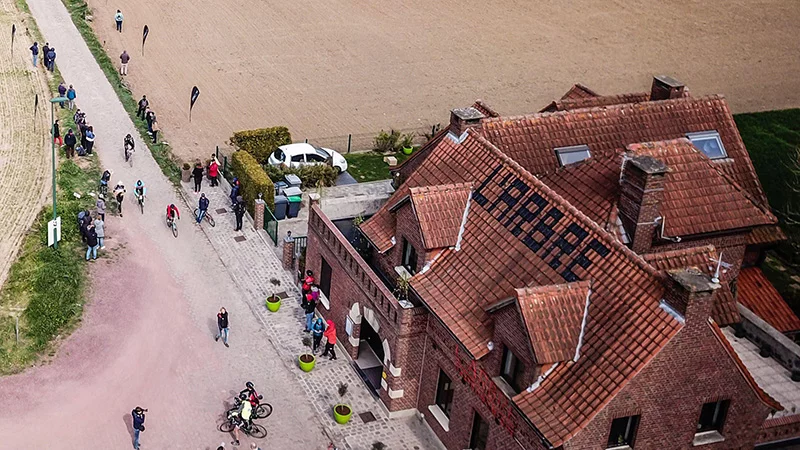
The pavement is more or less clean, it depends a lot on the weather but not that. There is an association which deals with the protection of the paved areas of Paris-Roubaix. friends of Paris-Roubaix. Throughout the year this association takes care of the maintenance of the pavement, recently John Degenkolb became the sponsor of this association. He, who is a big fan of the race, is very committed to it, he has won the stage of the cobblestones on the Tour de France 2018. Since 10 February 2020 the paved area of Hornaing - Wandignies-Hamage (3,700 m) has been named "Sector John Degenkolb", in tribute to the one who helps save the junior event.
What are the possible scenarios for Flandrienne classics?
The Flandrienne classics scenario is never written in advance, the riders race but not that. Weather conditions play a lot in the process, rain can cause many falls or wind that causes many edges. The main great runners of classic Flandriennes are Fabian Cancellara, Tom Boonen, Greg Avermaet, Peter Sagan, Wout Van Aert or Mathieu Van der Poel.