54,000 meters of elevation, barely 26 kilometers of individual time and a stage 20 simply dantesque: the route of the 113th Grand Boucle was thought to be a trap set for the four-time winner. Decryption of a route cut to bring down the boss.
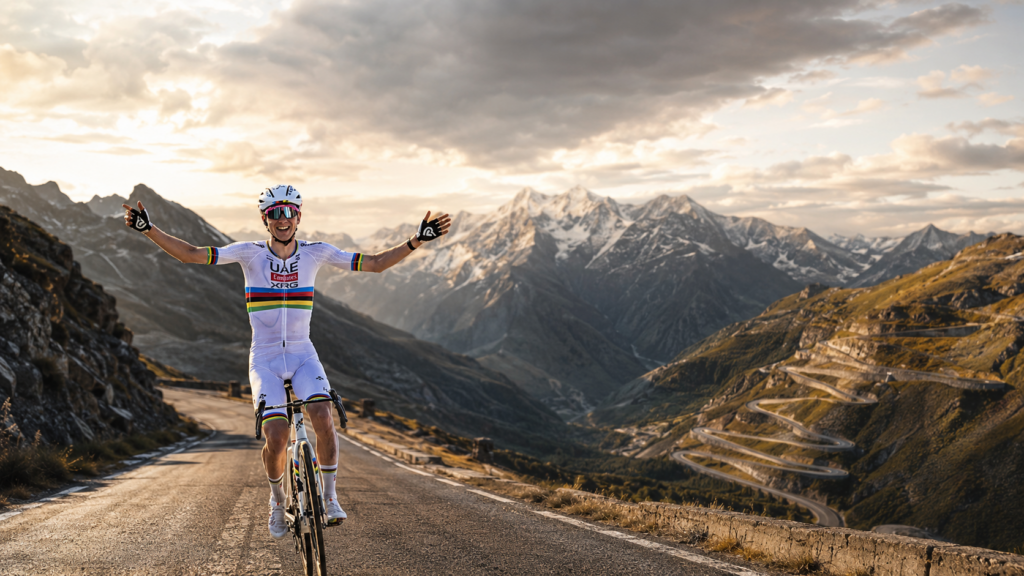
When Christian Prudhomme unveiled the tour of the Tour de France 2026, a message passed between the lines, barely veiled: this edition was designed to make life impossible for Tadej Pogačar. Winner in 2020, 2021, 2024 and 2025, the Slovenian arrives in July with a target behind his back and a record at the wheel — that of the five victories of Eddy Merckx, Bernard Hinault, Miguel Indurain and Jacques Anquetil.
But to match these legends, he will have to survive one of the most brutal tracks in recent history. This is why this Tower has everything in store.
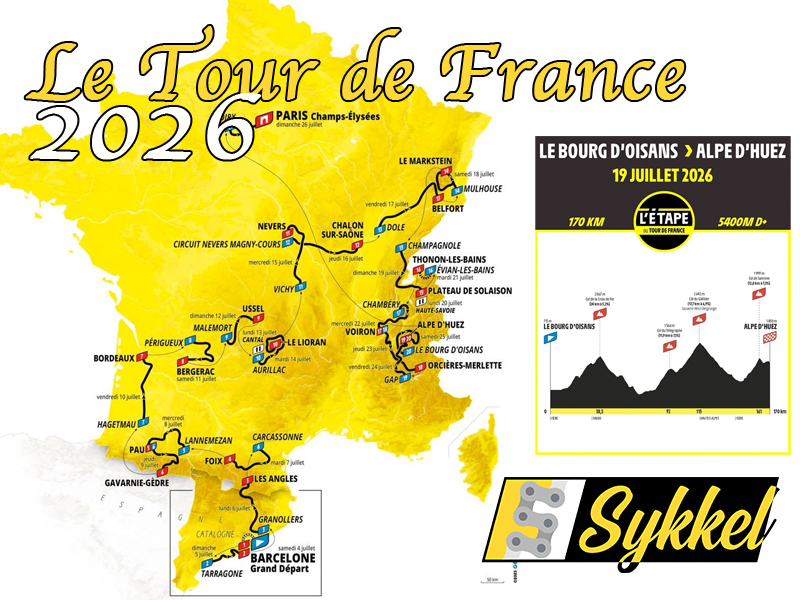
A Spanish Grand Departure and mountains from the third day
The 113th edition started on 4 July in Barcelona, the third Spanish Grand Départ after Saint-Sebastien in 1992 and Bilbao in 2023. A team time trial opens the hostilities, followed by two days in Iberian territory with a double arrival on Montjuïc hill, above the city.
No quiet legs: the mountain rises from the third stage, with an arrival at the station des Angles in the Pyrenees. The platoon is notified of entry — we will have to be ready right away.
In total: 21 stages, 3,333 kilometers, seven regions crossed and the five French mountains on the menu, from the Pyrenees to the Massif central, from Jura to Vosges, to the final Alpine bouquet.
The real trap: 54,000 m of elevation for only 26 km of time
This is where the course reveals its intention. With 54,000 metres of cumulative elevation and a single individual time trial of 26 kilometres between Evian-les-Bains and Thonon-les-Bains, the Tour 2026 is openly carved for a pure climber.
Why is it a problem for Pogačar? On paper, it climbs with the best and quickly rides against the watch. But by reducing the time to its congruous portion, the organizers erase one of the terrains where it takes time to its rivals, and concentrate all the suspense on the high mountain, where only one failure can make everything switch. This profile rewards aggression, resistance to repeated efforts over three weeks and a transcendent form from the first to the last day. No margin of error.
Stage 20: the most dantesque day in recent history
If we were to designate the heart of the trap, it would be her. The 20th stage, the day before the arrival in Paris, displays 5,600 meters of positive elevation in a single day — the biggest climbing day of the Tour in years.
The menu gives the vertigo: Col de la Croix de Fer, Col du Télégraphe, Col du Galibier — roof of the Tour 2026 at 2,642 meters — then the unprecedented ascent of the Col de Sarenne on its south-east slope, before the ultimate climb towards the Alpe d'Huez. Four monsters chained before the final summit.
And this is not even the only time the peloton climbs the Alpe: stages 19 and 20 propose two consecutive arrivals in the 21 mythical turns. The first, part of Gap, serves as a fun-mouth; the second is a blow of a club. Rarely will a day before the final finish have been so violent. It is there, 24 hours from Paris, that the yellow jersey could change shoulders.
Montmartre: even Paris no longer offers respite
Last betrayal of the route: the arrival in Paris itself. No more quiet parade before the sprint on the Champs-Élysées. As in 2025, the last stage will go back through the hill Montmartre and the dreadful street Lepic, climbed three times.
With a twist: the last climb is this time 15 kilometers from the line, compared to 6 last year. So leave the door open for one last attack, one last shot at the theater. Last year, it was precisely there that Wout van Aert had dropped Pogačar to take the last stage, in a popular festive atmosphere. The scenario of a classic massive sprint is no longer guaranteed.
So, can Pogačar fall?
Although the route is thought against him, recent history calls for caution: a hard route often favours the strongest rider in the mountains, and this rider, in recent seasons, is him. The trap could close on those who thought they were enjoying it.
But the 2026 bike is no longer a monologue. Jonas Vingegaard, his great rival, landed: the Dane just won his first Giro d'Italia with five stage victories, and now aims at the Giro-Tour double, a feat that only Marco Pantani (1998) and Pogačar himself (2024) succeeded in the modern era. With two second places on the Tour to avenge, he has an account to settle — and a Visma team cut to lock the race. And then there's the sensation of the year: Paul Seixas, 19, who fights his first Tour. Winner of the Tour du Pays Basque and the Flèche Wallonne this season, the French prodigy will be the youngest rider in the start since 1937 and is already among the candidates for the podium. It would take a bad day from Pogačar in the Galibier or Sarenne to make everything simmer.
One thing is certain: from the 4th to the 26th of July, the organizers did everything possible to ensure that we were not bored. And so that the king, if he wants his fifth crown, deserves it until the last turn of Montmartre.