History and Origins
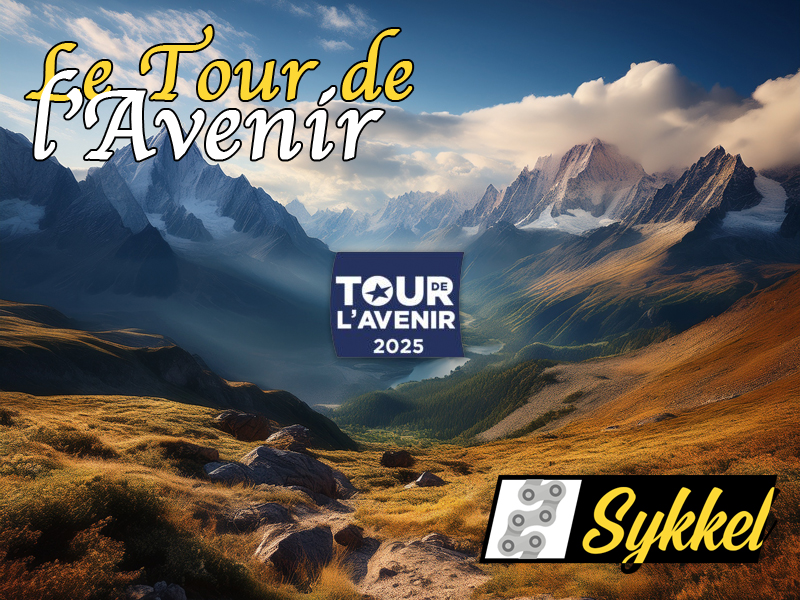
Created in 1961, the Tour de l'Avenir has become a must for the talents of the world's cycling industry. Reserved since 2007 for the under-23s, he asserts himself as the laboratory for the future winners of the biggest laps.
The Great Victories and the Legendary Achievements
The list of winners of the Tour de l'Avenir is impressive: it includes runners who have become references of the discipline. These include the last French victorious, Romain Sicard (2009) and Warren Barguil (2012). Barguil, for example, will later be the winner of several stages of the Tour de France. Sicard, on the other hand, made the double Tour de l'Avenir – world championship hope in 2009, revealing a solid climber.
Among the world stars revealed by the event are:
- Nairo Quintana (winner in 2010), became winner of the Giro and Vuelta.
- Tobias Foss and Tobias Johannessen, two Norwegian wonders that marked the last decade on the big towers.
- Tadej Pogačar (winner in 2018), who will write the history of the Tour de France four years later.
- Marc Soler (winner in 2017), today a pillar of the major teams and the Tour de France.
- Bauke Mollema, winner in 2007, is now recognized as one of the most consistent and offensive drivers of the international peloton.
These riders, among many others, illustrate how the Tour de l'Avenir is the true "server" to champions.
The area of the course: a field of exploitation
The route takes the most legendary routes in France, from Massif Central to Savoie, through the Alps and sometimes Italy. The mythical passes (Petit Saint-Bernard, Cormet de Roselend) are among the playgrounds that reveal the talent of climber, puncher or sprinter of future professionals.
The revealed nuggets
In addition to the official winners, many names came out of the shadows thanks to the Future: Nairo Quintana s的y is distinguished before shining on the largest towers, Warren Barguil and Romain Sicard have started their careers there, just like runners like Marc Soler, Tobias Foss, Tobias Johannessen, Bauke Mollema or Tadej Pogačar, whose destinies accelerated after their victory or performance in this prestigious race.
In 2025, there will be the French nugget Paul Seixas. The racer of the Decathlon-AG2R La Mondiale team will be the leader of the Tour de l'Avenir 2025. The one who will be number one on the team next year with the ambition to win the Tour de France within 3 years.
Women's edition of the Tour de l'Avenir
The Tour de l'Avenir Femmes is the female version of the prestigious Tour de l'Avenir, dedicated to cyclists under the age of 23. After the success of its first two editions, the third will be held from 23 to 29 August 2025, bringing together fifteen national teams on a demanding course across France. The event spans five stages and a prologue, alternating plain, hilly terrain and mountain, with the High Tarentaise as an organ for departure and an altitude finish at La Rosière.
Often played on common roads with the men's event, this race highlights the most promising female talents and marks a real progress for parity in high-level cycling. A gateway to the professional world, the Women's Future Tour promises show, engagement and revelation of the future champions of the world peloton.
Conclusion: A forced passage to the legend
The Future Tour devotes new talents every year. Let it be for the last French to shine (Warren Barguil, Romain Sicard) or world stars (Nairo Quintana, Tadej Pogačar, Marc Soler, Bauke Mollema, Tobias Foss, Tobias Johannessen), the race proves every summer that it remains the must-see gateway to the world's top cycling.