The evolution of tyre sections on Paris-Roubaix over the last 20 years reflects a major transformation, driven by the search for comfort, performance and reliability on pavements.
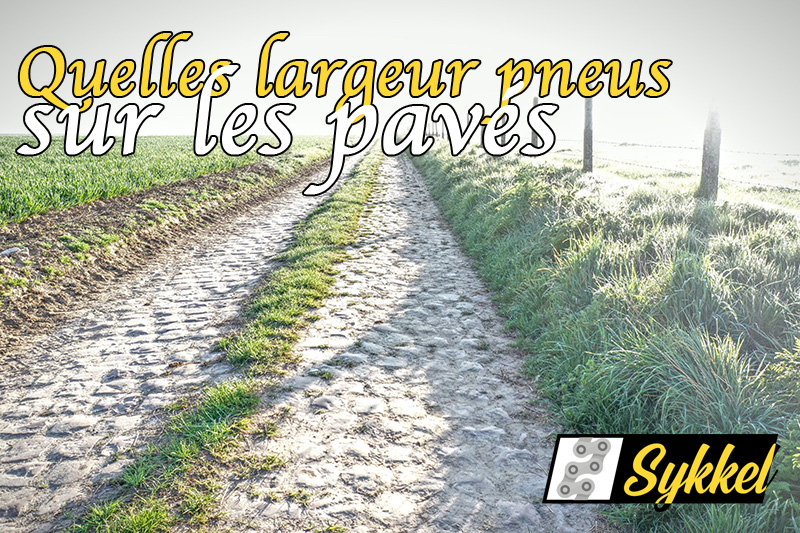
Paris-Roubaix is a mythical professional cycling race, created in 1896, which competes every year in April between Compiègne and the Roubaix racetrack in northern France. Nicknamed "Northern Hell", "Queen of Classics" or "the most beautiful of classics", it is famous for its many paved areas, which total about 50 to 56 kilometers on a 250 to 260 kilometers course.
These pavements, sometimes very irregular and slippery, make all the difficulty and legend of the race, with emblematic areas such as the Hole of Arenberg, Mons-en-Péveèle and the Carrefour de l'Arbre. The finish is traditionally judged on the track of the velodrome André-Pétrieux in Roubaix. Paris-Roubaix is considered one of the most demanding and prestigious events in the world, attracting the best riders and hundreds of thousands of spectators every year.
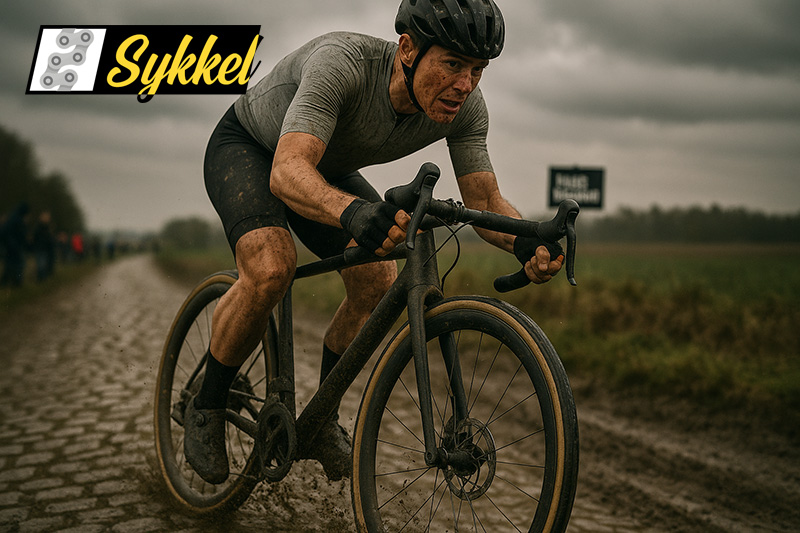
Mathieu Van der Poel drove during Paris-Roubaix 2025 with Pirelli P ZERO Race TLR RS tyres in section of 32 mm. He chose a pressure of 3.2 bar at the front and 3.5 bar at the rear, without opting for reinforced tyres, thus favouring lightness and performance on pavements. This wide section choice is in line with the peloton's current trend to maximize comfort and performance in the demanding cobblestone areas of the event.
Background and evolution of the sections
- Early 2000s :
Runners mainly used 23 mm hoses, sometimes 25 mm hoses for the most careful. The standard on the road was then the 23 mm, even on the pavements, despite the discomfort and the high risk of puncture. - Years 2010 :
A gradual transition to wider sections. In 2011, for example, Adrien Petit started with 25 mm hoses, which was considered wide for the time. Tom Boonen, an iconic champion of the race, started his career with 23 mm to finish in 28 mm. - Since 2018-2020 :
The advent of the tubeless (pneus without inner tube) and the improvement of the gums allow to increase the sections without sacrificing performance. The 28 mm tyres become the standard and are quickly replaced by 30 mm or even 32 mm cross sections in many teams. - Paris-Roubaix 2024-2025 :
The majority of the men's peloton now uses 30-32 mm tyres, mainly in tubeless tyres, to maximize comfort, efficiency and safety on pavements. Some women's teams, due to lower average speeds, may even opt for slightly higher sections.
In summary, in 20 years, the tyre sections in Paris-Roubaix have grown from 23 mm to a 30-32 mm standard, radically transforming the management of comfort, safety and performance on the North Hell.
Factors influencing this development
- Comfort and efficiency :
Wider sections allow to run at lower pressures, providing better comfort and shock absorption, while reducing rolling resistance on pavements. - Tubeless technology :
The transition from the hose to the tubeless allowed to avoid the pinches and to roll at lower pressures without an increased risk of puncture. - UCI Regulation :
The width of the tyres is indirectly limited by the regulation on the total wheel diameter (700 mm), which prevents the adoption of sections greater than 32-33 mm on the road. - Aerodynamics :
A compromise remains between comfort and aerodynamic drag, but the advantage over pavements now prevails over the exclusive search for speed over bitumen.
Technological innovation on Paris-Roubaix
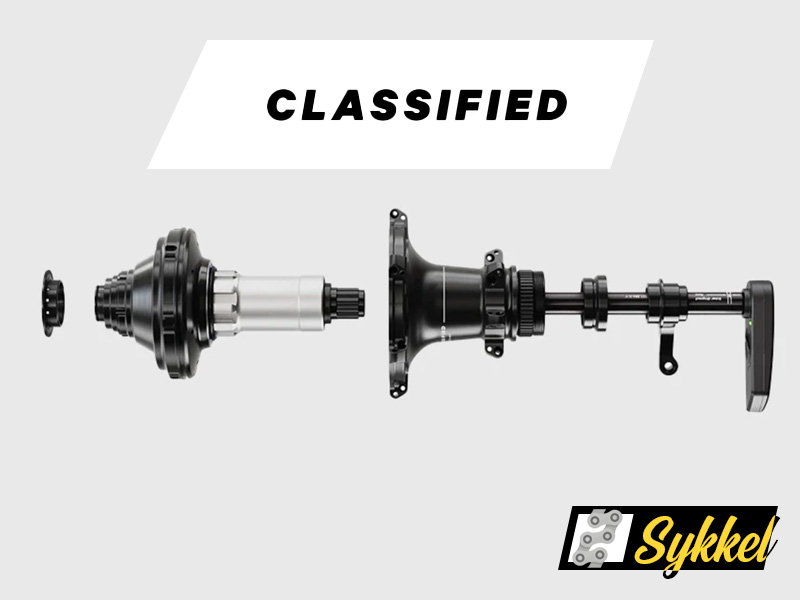
The Visma-Lease a Bike Team used an innovative tyre pressure management system called the "Tyre Pressure Management System" in Paris-Roubaix 2025. Gravaaa. This device allows riders to adjust the pressure of their tyres in real time during the race thanks to buttons placed on the handlebars. Pauline Ferrand-Prévot won the 2025 edition with this inflation system.
Operation of the Gravaa system:
- A small compressor, connected to the wheel hub and valve by a tube, allows to inflate or deflate the tyres on demand.
- Two buttons on the hanger allow to increase or decrease pressure depending on the terrain: low pressure on paved areas for more comfort and grip, higher pressure on asphalt for better efficiency.
- The system works thanks to the energy generated by rolling; pedalling is necessary to reinflate the tyres, which requires a few additional watts.
- The Gravaa brand, the team's exclusive partner, develops and supplies this system, which explains why it is not available for the other teams in the peloton.
This system has been praised for the strategic advantage it provides, allowing optimal adaptation to the variations of the unique Paris-Roubaix route.