The new trend of the cycle market is the 3D printing saddle, what are their qualities? Why change the manufacturing method? And especially for whom these 3D printing stools are intended.
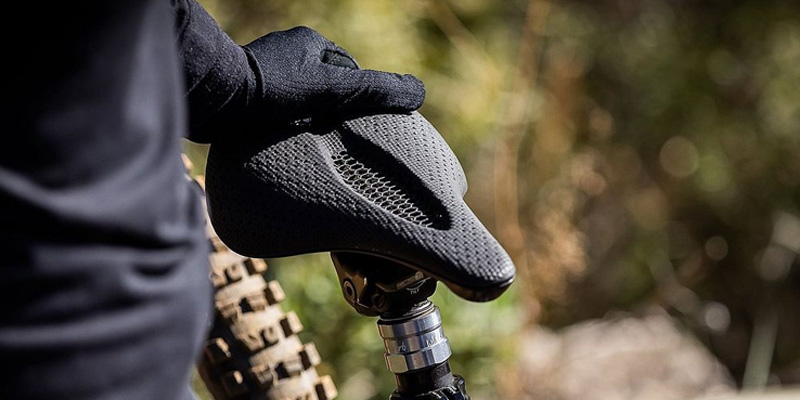
On a bike the saddle is the most important element for optimal comfort, it is often neglected by neo-cyclists. But a good saddle changes the situation and avoids suffering during more or less long bike rides. The bikes out of the factory are equipped with basic stools, which "must" fit the vast majority of practitioners. But this is not the case, each cyclist will have a different perception and a specific need for each.
Precursors in this matter, of course, are the American brand Specialized and the Italian brand Fizik. They both released a technology to produce stools in 3D printing. Technology Mirror for Specialized, which will be adapted on all the saddle ranges (Power, Romin EVO, ...). Digital Light Synthesis (DLS) for Italians from Fizik.
The comfort of a 3D printing saddle
3D printing is a real novelty in the industry, it also allows you to work by removing the material. But now by adding material, which makes it possible to be more precise and to have less waste. So the main argument brought by the big saddle brands is an improvement in comfort thanks to 3D printing, something to delight fans of Paris-Roubaix.
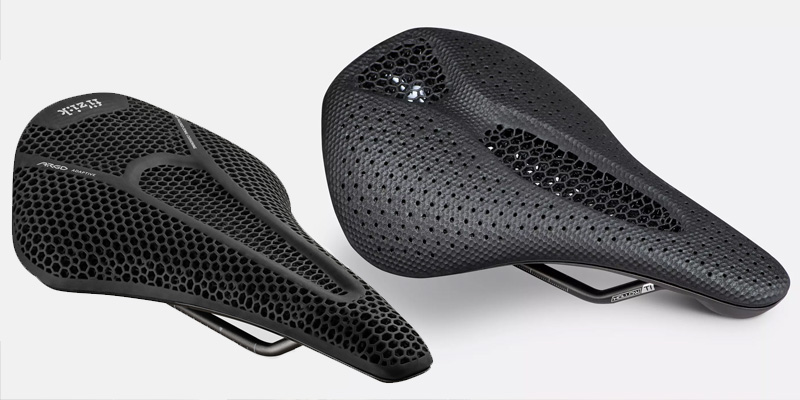
At Specialized we emphasize that technology Mirror, it is designed to effectively protect the blood flow and offer a perfect support for ischiatic tuberosis. Also, the American brand announces a 26% reduction in seat pressure compared to traditional foam stools.
The Italian brand Fizik exploit the power of 3D printing to create a new adaptive padding. This makes it possible to have a progressive and precise damping over the whole surface, it is also durable and weather resistant.
The price of a 3D printing saddle
It's a new technology in fashion, the brands of bike equipment understood it well. We should not expect products with "entry-level" prices, unfortunately.
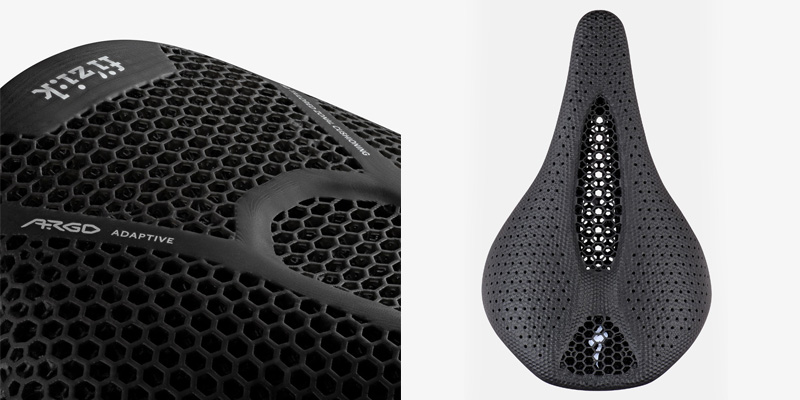
The Fizik models:
- Vento Argo R3 Adaptive (249€) 224g - 230g
- Vento Argo R1 Adaptive (299€) 190g - 196g
- Antares Versus Evo R3 Adaptive (259€) 217g - 220g
- Antares Versus Evo R1 Adaptive (299€) 180g - 183g
- Antares Versus Evo 00 Adaptive (399€) 168g - 171g
To be found directly on the fizik website.
The Specialized Models:
- S-Works Power with Mirror (470€) 190g-194g
- S-Works Romin EVO with Mirror (470€) 190g - 198g
- Power Pro with Mirror (370€) 245g - 251g
To be found directly on the site of Specialized
The Italian brands San Marco and Selle Italia have 3D printed models, but little information about these products. There'll be a model. Stool Italia SLR Boost 3D which will soon be on sale. At San Marco, this is the model Shortfit 2.0 presented at the last Eurobike.